What does RSS mean in text? In casual texting, it usually stands for “really sick story,” a slang reaction people use when something they hear or see is shocking, impressive, or hard to believe. It’s less about the letters and more about the reaction they express.
You’ll spot RSS mostly in texting and casual group chats, right after someone shares something surprising, funny, or wild. It’s a quick way to react without typing out a full sentence.
It’s worth noting that RSS also has a completely unrelated tech meaning, “Really Simple Syndication,” used for website feeds. That version has nothing to do with texting, which is exactly why the slang meaning throws people off at first.
RSS Meaning in Text
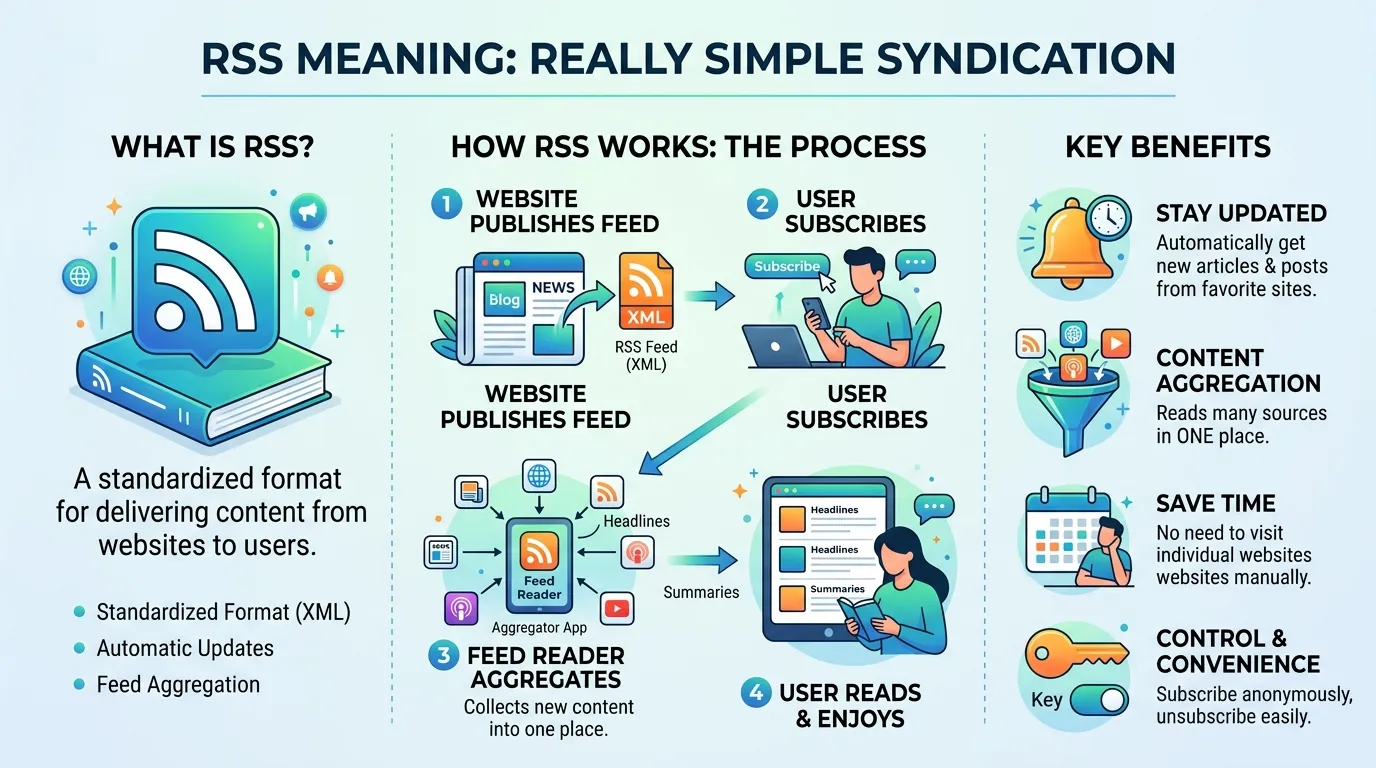
In texting, RSS most commonly means “Really Simple Syndication.” It’s a technology that allows people to receive updates from websites, blogs, news sites, and podcasts without visiting each website individually.
For example, someone might text:
“Subscribe to our RSS feed so you never miss new articles.”
Here, RSS refers to a content feed that automatically delivers updates whenever new content is published.
People may also use RSS in conversations about blogging.
For example:
“Does your website have an RSS feed?”
In this message, the person is asking whether the website provides automatic content updates.
Although RSS has several meanings in different industries, Really Simple Syndication is the most common meaning in online and technology-related conversations.
Is RSS Slang, an Acronym, or an Abbreviation?
RSS is an acronym, not internet slang.
It stands for “Really Simple Syndication,” a web technology introduced to help users subscribe to website updates.
Unlike abbreviations such as LOL or BRB, RSS isn’t used to express emotions or reactions. Instead, it’s a technical term that’s commonly used by bloggers, website owners, developers, and people who regularly read online content.
Because the abbreviation has existed for many years, it’s still widely recognized in the blogging and publishing community.
What Does RSS Mean in Everyday Chat?
In everyday conversations, RSS is usually mentioned when discussing websites, blogs, podcasts, or news feeds.
People commonly use it when talking about subscribing to updates.
Here are a few examples:
- “Do you have an RSS feed?”
- “I subscribed through RSS.”
- “RSS makes following blogs easier.”
- “Send me your RSS link.”
In these examples, RSS refers to a system that automatically delivers new content from websites.
It’s much less common in casual conversations unrelated to websites or technology.
Where People Use RSS
TikTok
RSS is rarely used on TikTok, but creators who discuss blogging, SEO, or technology may mention RSS feeds when talking about websites.
For example:
“Use RSS to stay updated with your favorite blogs.”
Snapchat
RSS is uncommon on Snapchat because most conversations focus on personal messaging rather than website subscriptions.
On Instagram, RSS may appear in posts or direct messages about blogging, digital marketing, podcasts, or website management.
For example:
“Don’t forget to subscribe through our RSS feed.”
People often mention RSS in WhatsApp groups related to blogging, web development, or digital marketing.
For example:
“Here’s our RSS feed for new updates.”
SMS
RSS occasionally appears in text messages when discussing websites, newsletters, podcasts, or online publishing.
In most technology-related conversations, RSS means “Really Simple Syndication.”
Real Chat Examples
Below are 10 realistic conversations showing how RSS is used in text messages. In most cases, RSS means “Really Simple Syndication.”
Example 1
A: How do I get updates from your blog?
B: Just subscribe to our RSS feed.
A: Thanks!
Example 2
A: Does your website support RSS?
B: Yes, it does.
A: Great, I’ll subscribe.
Example 3
A: I don’t want email notifications.
B: You can use our RSS feed instead.
A: That works for me.
Example 4
A: How do you keep up with so many blogs?
B: I use an RSS reader.
A: That’s a smart idea.
Example 5
A: Did you publish a new article?
B: Yes, it appeared on our RSS feed.
A: I’ll check it out.
Example 6
A: What’s the easiest way to follow your podcast?
B: Subscribe through the RSS feed.
A: Done!
Example 7
A: I missed your latest post.
B: RSS sends updates automatically.
A: I should start using it.
Example 8
A: Can I add your website to my feed reader?
B: Sure, here’s the RSS link.
A: Thank you.
Example 9
A: Why do bloggers use RSS?
B: It helps readers receive new content instantly.
A: That makes sense.
Example 10
A: Is RSS still useful today?
B: Absolutely, many people still use it for blogs and podcasts.
A: I’ll give it a try.
How to Reply When Someone Says “RSS”
If someone mentions RSS, they’re usually talking about a website feed or content subscription. Your reply depends on whether you’re asking about it or discussing it.
Funny Replies
If you’re chatting casually, these playful responses work well.
- “Old school, but still useful. 😄”
- “RSS never goes out of style!”
- “You’re a true blogging fan!”
- “Classic internet!”
Casual Replies
These are natural responses for everyday conversations.
- “I’ll subscribe.”
- “Thanks for the link.”
- “Good to know.”
- “I’ll check it out.”
Friendly Replies
These responses help keep the conversation positive.
- “Thanks for sharing!”
- “I appreciate the recommendation.”
- “I’ll add it to my reader.”
- “That sounds useful.”
Neutral Replies
If you’re in a more formal conversation, these responses work well.
- “Understood.”
- “Thank you for the information.”
- “I’ll review it.”
- “That makes sense.”
Is RSS Rude or Offensive?
No. RSS is not rude or offensive.
It’s a technical acronym that stands for “Really Simple Syndication.” People use it when discussing blogs, websites, podcasts, and online content.
Because RSS is a technology term rather than internet slang, it’s perfectly acceptable to use in professional communication, educational settings, and workplace discussions.
Unlike many texting abbreviations, RSS doesn’t express emotions or opinions. It simply refers to a method of receiving website updates automatically.
Overall, RSS is a neutral and widely accepted abbreviation.
Who Uses This Term?
RSS is most commonly used by:
- Bloggers
- Website owners
- SEO professionals
- Content creators
- Digital marketers
- Podcast listeners
- News readers
- Web developers
You’ll commonly see RSS mentioned on:
- X (formerly Twitter)
- Discord
- Blogging communities
- Online forums
- SMS text messages
Although RSS isn’t as popular as it was years ago, it’s still widely used by people who want to follow blogs, podcasts, and news websites without relying on email newsletters or social media.
Because it’s an established web standard, RSS remains an important term in online publishing and content management.
Origin of the Term
The abbreviation RSS stands for “Really Simple Syndication.” It was introduced in the late 1990s as a web technology that allows websites to automatically share new content with subscribers through an RSS feed.
As blogging and online news became more popular, RSS quickly became one of the easiest ways for readers to stay updated without visiting each website manually. Users could subscribe to multiple blogs, podcasts, and news sites using an RSS reader, which collected all new updates in one place.
Today, RSS is still used by bloggers, publishers, podcasters, developers, and SEO professionals. Although social media and email newsletters have become more common, RSS continues to be a reliable way to follow content from websites.
Unlike many internet abbreviations, RSS is a technical term rather than slang and is widely recognized in the digital publishing industry.
Comparison Table
| Term | Meaning | Type | Usage | Popularity |
| RSS | Really Simple Syndication | Acronym | Subscribing to website, blog, or podcast updates | Medium |
| IDK | I Don’t Know | Acronym | Expressing uncertainty | Very High |
| IDC | I Don’t Care | Acronym | Showing indifference | High |
| IMO | In My Opinion | Acronym | Sharing a personal opinion | High |
| BRB | Be Right Back | Acronym | Letting someone know you’ll return soon | Very High |
Unlike abbreviations such as IDK or BRB, RSS isn’t used during casual conversations. Instead, it’s a technical acronym related to websites, blogs, podcasts, and online publishing.
Real-World Usage Example
Imagine you regularly read several technology blogs and don’t want to visit each website every day to check for new articles.
A friend says:
“Why don’t you subscribe to their RSS feed? You’ll automatically get every new post.”
You reply:
“That’s much easier. I’ll do that today.”
In this situation, RSS refers to a content feed that automatically delivers updates whenever a website publishes something new.
People also use RSS in many everyday situations, such as:
- Following your favorite blogs.
- Receiving updates from news websites.
- Subscribing to podcasts.
- Tracking website content for research.
- Managing multiple websites in one RSS reader.
Because RSS is designed for content subscriptions, it’s especially useful for people who follow many websites.
FAQs
What does RSS mean in text messages?
In text messages, RSS usually stands for “Really Simple Syndication.” It’s commonly mentioned when discussing blogs, websites, podcasts, or content subscriptions.
What does RSS mean on TikTok?
On TikTok, RSS is uncommon but may appear in videos or comments about blogging, SEO, websites, or digital marketing.
Is RSS slang?
No. RSS isn’t slang. It’s a technical acronym that stands for “Really Simple Syndication.”
Is RSS rude or offensive?
No. RSS isn’t rude or offensive. It’s a neutral technology term that’s appropriate for both casual and professional conversations.
How should you reply to RSS?
A suitable reply depends on the conversation. Some natural responses include:
- “Thanks for the RSS link.”
- “I’ll subscribe.”
- “I use an RSS reader too.”
- “That will make following your blog easier.”
- “Good idea!”
Conclusion
RSS is a technical acronym that stands for “Really Simple Syndication.” It allows users to subscribe to blogs, news websites, podcasts, and other online content so they can receive updates automatically.
You’ll most often see RSS mentioned in conversations about blogging, SEO, digital marketing, websites, and online publishing. While it isn’t internet slang like LOL or BRB, it’s still a widely recognized abbreviation among content creators and website owners.
If someone mentions RSS in a text or online discussion, they’re usually referring to a website feed rather than casual texting slang. Understanding its meaning makes it easier to follow conversations about blogs, podcasts, and digital content.