What does SD mean in text? Most often, especially on dating apps and social media, it means “sugar daddy.” But the same two letters can also stand for “same day,” “South Dakota,” or “Secure Digital,” depending on where you see it.
You’ll run into SD in texting, Instagram bios, dating app profiles, and tech-related chats, where it means something completely different each time. That range is exactly why the term causes so much confusion.
People search for SD because guessing wrong can lead to an awkward misunderstanding. A text about “SD shipping” has nothing to do with a dating conversation using the same abbreviation, so reading the full context always matters.
SD Meaning in Text
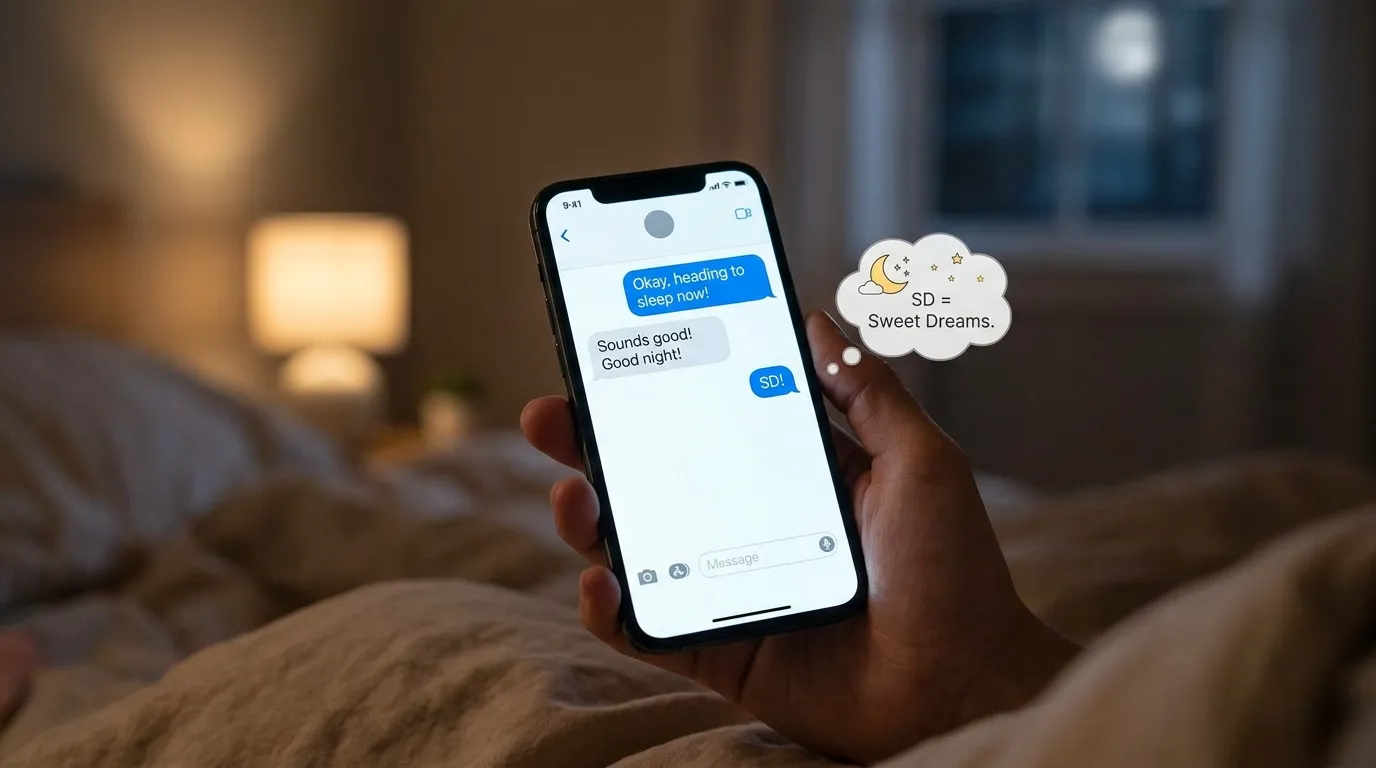
In texting, SD most commonly means “Sweet Dreams.” People use it at the end of a conversation to wish someone a peaceful and restful night.
For example, someone might text:
“Good night! SD 😊”
Here, SD simply means “Sweet Dreams.” It’s a kind and affectionate way to end the conversation.
Friends, family members, and couples often use SD before going to bed because it’s shorter than typing the full phrase.
For example:
“I’m going to sleep now. SD!”
In this message, the sender is wishing the other person a pleasant night’s sleep.
Although “Sweet Dreams” is the most common meaning in personal conversations, SD can have other meanings in different contexts, such as gaming, technology, or business. That’s why it’s always important to read the surrounding conversation.
Is SD Slang, an Acronym, or an Abbreviation?
SD is generally considered a texting abbreviation and an internet acronym. It shortens the phrase “Sweet Dreams” into just two letters, making bedtime messages quicker and easier to type.
Unlike many slang terms, SD doesn’t create a new word. Instead, it simply shortens a familiar expression that people already use in everyday conversations.
Because it’s brief and easy to understand, SD has become a popular abbreviation in casual messaging.
What Does SD Mean in Everyday Chat?
In everyday conversations, people use SD to end a chat on a warm and friendly note before going to sleep.
It’s commonly used after saying good night or before ending a late-night conversation.
Here are a few examples:
- “Good night! SD ❤️”
- “Sleep well. SD!”
- “Talk to you tomorrow. SD.”
- “I’m heading to bed now. SD!”
If the message comes from a friend or family member, SD usually means “Sweet Dreams.” If it’s from a romantic partner, it often carries a more affectionate tone while keeping the same meaning.
The context of the conversation usually makes the meaning clear.
Where People Use SD
TikTok
On TikTok, SD may appear in comments or direct messages when people are ending a conversation for the night.
For example:
“Good night everyone. SD! 🌙”
Here, SD means “Sweet Dreams.”
Snapchat
Snapchat users often send SD before going offline for the night.
Someone might text:
“I’m really tired. SD!”
It’s a quick and friendly way to say good night.
On Instagram, SD can appear in direct messages, Stories, or comments between friends and family.
For example:
“Hope you sleep well. SD ❤️”
The abbreviation helps keep the message short while expressing kindness.
WhatsApp is one of the most common places where SD is used because people frequently chat with close friends and family before bedtime.
For example:
“Good night. SD!”
It’s a simple and thoughtful way to end the conversation.
SMS
SD is also common in regular text messages. Since SMS conversations are usually brief, people often use abbreviations to save time.
If someone is chatting with a friend, family member, or partner, SD most often means “Sweet Dreams” when used before bedtime.
Real Chat Examples
Below are 10 realistic conversations showing how SD is used in everyday text messages. In most cases, SD means “Sweet Dreams.”
Example 1
A: I’m going to bed now.
B: Okay, SD! 😊
A: Thanks, good night!
Example 2
A: It’s getting late.
B: Yeah, SD ❤️
A: Sleep well!
Example 3
A: I have an early meeting tomorrow.
B: Then you should get some rest. SD!
A: Will do.
Example 4
A: Good night, everyone!
B: SD!
A: See you tomorrow.
Example 5
A: Thanks for talking with me tonight.
B: Anytime. SD!
A: Sweet dreams to you too.
Example 6
A: I’m finally feeling sleepy.
B: Perfect. SD and take care.
A: Thanks!
Example 7
A: I’ll text you tomorrow morning.
B: Sounds good. SD!
A: Good night.
Example 8
A: Today’s been exhausting.
B: Get some rest. SD!
A: I definitely will.
Example 9
A: Time for bed.
B: SD ❤️ Talk tomorrow.
A: Looking forward to it.
Example 10
A: Good night!
B: SD! Sleep well.
A: You too.
How to Reply When Someone Says “SD”
If someone sends you SD, they’re usually wishing you “Sweet Dreams.” A warm and friendly reply is the best response.
Funny Replies
If you’re chatting with a close friend, these playful replies work well.
- “Only if my alarm doesn’t ruin them. 😂”
- “I’ll try my best!”
- “Hopefully no weird dreams tonight!”
- “Sweet dreams to you too!”
Casual Replies
For everyday conversations, these simple responses are perfect.
- “Thanks!”
- “You too!”
- “Good night!”
- “Sleep well.”
Friendly Replies
These replies help end the conversation on a positive note.
- “Thank you! SD to you too.”
- “Hope you sleep well.”
- “Good night. Talk tomorrow!”
- “Have a great night’s sleep.”
Neutral Replies
If you don’t know the person very well, these replies are polite and appropriate.
- “Thank you.”
- “Good night.”
- “Take care.”
- “See you tomorrow.”
Is SD Rude or Offensive?
No. SD is not considered rude or offensive.
When it means “Sweet Dreams,” it’s a kind and thoughtful expression used to wish someone a good night’s sleep. People commonly use it with friends, family members, and romantic partners.
Because it’s friendly and positive, SD is generally safe to use in casual conversations.
However, it’s not commonly used in professional communication. If you’re sending a message to a teacher, manager, or client, it’s usually better to write “Good night” instead of using abbreviations.
Overall, SD is a respectful and widely accepted abbreviation when used in personal conversations.
Who Uses This Term?
SD is used by people of all ages, but it’s especially popular among teenagers and young adults who frequently text or use social media.
You’ll commonly see it used by Gen Z and millennials because they often shorten common phrases while chatting online.
SD frequently appears on:
- TikTok
- Snapchat
- Facebook Messenger
- SMS text messages
Although many people still type “Sweet Dreams” in full, others prefer SD because it’s faster to write while keeping the same warm and caring meaning.
For most users, SD is simply a quick way to wish someone a peaceful night’s sleep before ending a conversation.
Origin of the Term
The abbreviation SD comes from the phrase “Sweet Dreams,” a traditional expression people have used for many years to wish someone a restful night’s sleep.
As texting and instant messaging became more popular, users began shortening common phrases to save time. Instead of typing “Sweet Dreams” every night, many people started using SD in text messages and online chats.
Over time, the abbreviation spread to messaging apps and social media platforms such as TikTok, Snapchat, Instagram, WhatsApp, and Facebook Messenger. Today, it’s a familiar bedtime expression in casual digital conversations.
Although SD can have other meanings in different industries or technical fields, “Sweet Dreams” remains the most common meaning in personal text messages.
Comparison Table
| Term | Meaning | Type | Usage | Popularity |
| SD | Sweet Dreams | Abbreviation | Wishing someone a good night’s sleep | Medium |
| IDK | I Don’t Know | Acronym | Expressing uncertainty | Very High |
| IDC | I Don’t Care | Acronym | Showing indifference | High |
| IMO | In My Opinion | Acronym | Sharing a personal opinion | High |
| BRB | Be Right Back | Acronym | Letting someone know you’ll return soon | Very High |
Unlike abbreviations such as IDK or BRB, SD is mainly used at the end of a conversation. It adds a warm and thoughtful touch before saying good night.
Real-World Usage Example
Imagine you’ve been chatting with a close friend late in the evening. After talking for a while, both of you are ready to go to sleep.
Your friend texts:
“I’m heading to bed now. SD! 🌙”
You reply:
“Thanks! SD to you too. Sleep well!”
In this situation, SD means “Sweet Dreams.” It’s simply a friendly way to end the conversation before going to bed.
People also use SD in many everyday situations, such as:
- Ending a late-night conversation.
- Wishing a friend a peaceful night’s sleep.
- Sending a bedtime message to a family member.
- Saying good night to a boyfriend or girlfriend.
- Ending a WhatsApp or Snapchat chat before going offline.
Because SD has a positive meaning, it’s commonly used in personal conversations with people you know well.
FAQs
What does SD mean in text messages?
In text messages, SD usually stands for “Sweet Dreams.” People use it to wish someone a restful night’s sleep before ending a conversation.
What does SD mean on TikTok?
On TikTok, SD may appear in comments, captions, or direct messages when users are saying good night or ending a conversation. It usually means “Sweet Dreams.”
Is SD slang?
SD is generally considered a texting abbreviation rather than traditional slang. It shortens the phrase “Sweet Dreams” into two letters.
Is SD rude or offensive?
No. SD isn’t rude or offensive. It’s a kind, friendly, and positive abbreviation that’s commonly used in casual conversations.
How should you reply to SD?
A suitable reply depends on the conversation. Some natural responses include:
- “SD to you too!”
- “Thank you. Sleep well!”
- “Good night!”
- “Sweet dreams!”
- “See you tomorrow.”
Conclusion
SD is a simple texting abbreviation that usually stands for “Sweet Dreams.” People use it to wish friends, family members, or loved ones a peaceful night’s sleep before ending a conversation.
You’ll commonly see SD in text messages, Snapchat chats, Instagram DMs, WhatsApp conversations, and other casual online discussions. Although the abbreviation can have different meanings in other contexts, “Sweet Dreams” is the definition you’ll encounter most often in personal messaging.
If someone sends you SD, they’re usually ending the conversation with a thoughtful and caring message. A friendly reply like “You too!” or “Sweet dreams!” is the perfect response.

Daniel Carter is a Senior Content Editor at MeaningsHubb.com , creating clear, accurate, and reader-friendly content.